Tuesday, 20 October 2015

The Blues Brothers - My Favourite Movie


Why The Blues Brothers Is The Greatest American Car Movie


While I love the zen simplicity of The Winter Soldier and the pure mayhem of Fight Club, the film I most enjoy watching is The Blues Brothers. How does the worst era of American cars produce, in my opinion one of the best movie to date? Through destruction, of course.

For one of the most memorable comedy films of the late 20th century, The Blues Brothers starts grimly enough, with an arresting aerial shot of industrial Chicago, as the smoke from dark satanic chimneys smear the sunset. It's as if director John Landis is tipping us off that what follows, a film of madcap fun and action rampage, is comic escapism from the bleak modern American life.

The Blues Brothers, made in 1980, is recognised now as more than a cult classic. By 2013, it had taken more than £70million in box office and DVD receipts and stands as one of Landis's finest films (along with Trading Places and An American Werewolf in London)..
Expanding on their Saturday Night Live characters, John Belushi and Dan Aykroyd star as Jake and Elwood Blues, two white boys with black soul. Sporting cool shades and look-alike suits, Jake and Elwood are dispatched on a "mission from God" by their former teacher, Sister Mary Stigmata (Kathleen Freeman). Said mission is to raise $5000 to save an orphanage. In the course of their zany adventures, the Blues Brothers run afoul of neo-Nazi Henry Gibson, perform the theme from Rawhide before the most unruly bar crowd in written history, and lay waste to hundreds of cars on the streets and freeways of Chicago. In case you aren't swept up in the infectuous nuttiness of the brothers Blue, you might have fun spotting film's legion of guest stars, including James Brown, Cab Calloway, Aretha Franklin, Ray Charles, John Candy, Carrie Fisher, Steve Lawrence, Twiggy, Paul Reubens (aka Pee-Wee Herman), Frank Oz, and Steven Spielberg.
The movie's plot is a simple one, to put it mildly. The brothers visit their old orphanage, learn that its future is in jeopardy because of five thousand dollars due in back taxes, and determine to raise the money by getting their old band together and putting on a show. Their odyssey takes them to several sleazy Chicago locations, including a Van Buren flophouse, Maxwell Street, and lower Wacker Drive. They find their old friends in unlikely places, like a restaurant run by Aretha Franklin, a music shop run by Ray Charles, and a gospel church run by James Brown.

Their adventures include run-ins with suburban cops, good ol' boys, and Nazis who are trying to stage a demonstration. One of the intriguing things about this movie is the way it borrows so freely and literally from news events. The plot develops into a sort of musical Mad Mad Mad Mad World, with the Blues Brothers being pursued at the same time by avenging cops, Nazis, and an enraged country and western band led by Charles Napier, that character actor with the smile like Jaws. The chase is interrupted from time to time for musical numbers, which are mostly very good and filled with high-powered energy.

Aretha Franklin occupies one of the movie's best scenes, in her South Side soul food restaurant. Cab Calloway, as a sort of road manager for the Blues Brothers, struts through a wonderful old-style production of Minnie the Moocher. The Brothers themselves star in several improbable numbers; the funniest has the band playing in a country and western bar where wire mesh has been installed to protect the band from beer bottles thrown by the customers.

I was saying the musical numbers interrupt the chases. The fact is, the whole movie is a chase, with Jake and Elwood piloting a used police car that seems, as it hurdles across suspension bridges from one side to the other, to have a life of its own. There can rarely have been a movie that made so free with its locations as this one. There are incredible, sensational chase sequences under the elevated train tracks, on overpasses, in subway tunnels under the Loop, and literally through Daley Center. One crash in particular, a pileup involving maybe a dozen police cars, has to be seen to be believed: I've never seen stunt coordination like this before.

What's a little startling about this movie is that all of this works. The Blues Brothers cost untold millions of dollars and kept threatening to grow completely out of control. But director John Landis (of “Animal House”) has somehow pulled it together, with a good deal of help from the strongly defined personalities of the title characters. Belushi and Aykroyd come over as hard-boiled city guys, total cynics with a world-view of sublime simplicity, and that all fits perfectly with the movie's other parts. There's even room, in the midst of the carnage and mayhem, for a surprising amount of grace, humor, and whimsy.
Say what you will about the comedic talents of Will Ferrell, Adam Sandler or Mike Myers but they share something in common in terms of making their name on comedy sketch show Saturday Night Live. These names are just three of the shows recent successful comedians but having, personally, been born in the late 90's and grew up throughout the 20000's, most of the comedies I was exposed to were filled with the familiar faces that actually had a hand in the origins of this show - Chevy Chase, Bill Murray, Steve Martin, Eddie Murphy and, of course, John Belushi and Dan Aykroyd. In fact, The Blues Brothers is an adaptation of a short sketch that first aired on Saturday Night Live and is one of only two successful film adaptations from the show - the other being Wayne's World.

But not just the plot and actors, but also the vehicles. The '70s was largely a terrible time in this grand old country for cars, politics, fashion, the environment, industry, the economy, sex, drugs, television, and pretty much every thing else. The '70s was just a screwed up time.
What we get out of the John Landis-directed, Dan Aykroyd-penned musical action road trip comedy is a farewell to all of it. A giant flaming middle finger to the gilded decadence of a decade not worth remembering, backed by Carrie Fisher with an actual flamethrower. The film's anti-heroes can scarcely see the point in continuing a normal, humdrum existence when they could just put together a band to make real music as opposed to the shitty disco and faux tropicana crap rotting the brains of too many polyester-clad fakers. They may be singing American rhythm-and-blues music, but "Joliet" Jake and Elwood Blues are punk.


If the movie wasn't already great for the comedy, the music, and the countless historic cameos (John Lee Hooker, Aretha Franklin, Ray Charles… the entire band!) it would be worth it for the ceaseless assault on mediocre American cars.
While a Bentley does show up and, of course, Twiggy drives a Jaguar XK-E, there are really only two cars in the film: the Bluesmobile and every other piece of Detroit-built shit.

The Bluesmobile is, in theory, a single retired 1974 Dodge Monaco Mount Prospect, Illinois patrol car (in reality they say they used a dozen cars). A simple, workingman's vehicle that's the last model made before the OPEC oil crisis ruined American muscle cars. Just listen to, arguably, one of the most famous speech of the film
“It's got a cop motor, a 440 cubic inch plant, it's got cop tires, cop suspensions, cop shocks. It's a model made before catalytic converters so it'll run good on regular gas”.
Pre-catalytic converts. PRE! Get it?

It's this nostalgia that fuels the Bluesmobile and allows it to beat back all the Malaise Era-restricted cars that attempt to thwart it. Whether it's an Illinois Nazi (I hate them) in a Ford Pinto Station Wagon or hundreds of later model Dodge Polaras and Ford LTDs, nothing can stop this humble American iron on its Mission From God.
There are so many throw-away car references in the film, including when Elwood crashes the Bluesmobile into a car dealership exclaiming "the new Oldsmobiles are in early this year!" because who really gives a shit?
Perhaps this is why the second film is so unsatisfying. The original held the world record for most cars destroyed in a film, only to be usurped by the unfortunate Blues Brothers 2000. America was on the upswing and those Panther police cars are enormously better than an old Royal Monaco. In any other this kind of destruction would be gratuitous, but in 1979 this is doing God's bidding. When the world around you is terrible the best you can do is to venerate it with a rocket-propelled grenade and a 50-car pileup.

Something simple goes a long way, and in the case of this film, it proves exactly right. The Blues Brothers in terms of story is nothing elaborate, but where it stands out, are the performances by its leads. The chemistry between the two lead actors is what elevates the simple plot to greatness and it's a fun; entertaining picture that in the long run is a memorable piece of comedy. The Blues Brothers is the best movie I’ve ever seen and a must see film, a terrific performance by Dan Aykroyd and John Belushi , of which Belushi delivers a highly memorable performance, one that defined his sadly too short career. 

Grade - A+++ (Legendary Masterpiece)

Captain America: The Winter Soldier


The ninth installment in the Marvel cinematic universe, Captain America: The Winter Soldier is also its most intricately crafted. The set-up is straightforward enough:  Cap and Black Widow are working for/with Nick Fury when S.H.I.E.L.D. comes under attack. Unsure of whom, if anyone, to trust, they must uncover a hidden threat before it destroys them all. The film not only serves as a strong follow-up to Cap’s first outing, Captain America: The First Avenger, and Joss Whedon’s ensemble juggernaut The Avengers, it also has the strongest ties to and most profound impact on the Marvel Cinematic Universe at large. The repercussions of the events of this film will reverberate throughout all of Marvel’s properties.
More to the point, the film is one of, if not the strongest individual installments to date. One part spy thriller, one part character journey, one part visceral action movie, and one part straight-up superhero adventure film, The Winter Solider hits all of the right notes and serves as an example of the very best of what comic book movies have to offer. The scale of the film alone is unprecedented for Marvel, it feels as if the studio has taken every lesson they’ve learned in terms of how to construct and effectively execute an action sequence and integrated it into one elaborate and gorgeous piece of spectacle.
Best known for their work on television comedies such as Community and Happy Endings, no one will ever question whether or not directors Anthony and Joe Russo are capable of delivering exhilarating and innovative spectacle again. The Winter Soldier moves at a pulse-pounding pace and one never gets the sense that even one of the 136-minutes of screen time was wasted. Car chases, hard-core hand-to-hand, aerial dogfights and pressure-cooker gun battles are interwoven with a multi-layered script that combines elements of at least three genres.
The film operates on multiple levels. This is a sharp script that hearkens back to the ‘70s-era political thrillers. The filmmakers understand the tropes enough to both revel in and toy with them, delivering moments that feel at once classic yet fresh. Things do get a bit plot-heavy in moments and the villains’ motivations read as somewhat amorphous. It’s not quite, “we like evil because it’s so EVIL,” but, it’s in that arena. Having said that, the film doesn’t shy away from some of those pulpy elements; in fact, it plays with and utilizes them to infuse the proceedings with a sense of play.
One of the most surprising aspects of The Winter Soldier is how bold Marvel is willing to be with it. Not only does the film potentially shake-up the structure of their entire cinematic universe, but the creators understand the political thriller enough to get that if they’re going to do one, and do it well, then they’re going to have to introduce a strong point-of-view about something that is relevant to our contemporary world – and that they do.
The Winter Soldier offers a strong perspective about a current geopolitical hot button issue - the cost and meaning of freedom. The execution is graceful, though, in the sense that it does so without ever veering into proselytization or becoming too convoluted. There are ideas to chew on if you’re so inclined, but at its core, The Winter Soldier remains a pulsing and fast paced piece of entertainment.
Character isn’t sacrificed for the sake of plot, though. The Winter Soldier is a well-balanced film that serves up comedy, drama, and action. The big and small moments are equally thick with tension and there is some powerful development in this film. In fact, Chris Evans’ Steve Rogers / Captain America in some ways becomes the most relatable of the Marvel heroes in this film, which is, of course, a bit odd, given his origin.

There was a promise of an arc for him that began in The Avengers and really pays off here. The Winter Soldier explores the cost of being Cap: a man out of time, who in many ways belongs to no one and nothing, in a wrenching manner. There is a sequence early on in the film that is particularly shattering to watch as a fan of these characters. We’re truly exposed to his vulnerability in this film, but he's also ten times the a**-kicker and name taker. That shield has never been utilized so dynamically or been rendered as fiercely.

In general, the characters are given rich ground to play in, with the exception of a few who’ve been introduced in this film. Emily VanCamp’s Sharon Carter is only afforded cursory treatment, and while Anthony Mackie gives a strong showing as Falcon, and fans will likely enjoy his presence, his purpose is primarily to serve as Cap’s sidekick. Rogers’ true partner in the film is Scarlett Johansson’s Natasha Romanoff/Black Widow.
Building on what Whedon established for her in The Avengers, The Winter Soldier continues what is evolving into a fascinating character trajectory. She and Cap have a great repartee which feels akin to some of the truly witty early cinema rom-coms (though, theirs is not necessarily a romantic engagement). She is a powerhouse unto herself as well, though. Widow, who's already been endowed with fantastic comedic moments and a fascinating and full backstory as a character, is given a tremendous moral conflict here and left at a very interesting crossroads by the film's end.
Nick Fury is also granted scenes ripe with genuine emotion in the film. Humor, heart, and sincere fear are all in play and he too is brought to a surprising and exciting place by the story’s conclusion. In some ways, we see more from Fury here than in all of his previous appearances combined.
One very notable new addition is the legendary Robert Redford’s Alexander Pierce. This is more than just a cameo, and Redford, not surprisingly, turns in a gorgeous performance that illustrates that he is well aware of exactly what movie he’s in. The actor brings a gravitas that helps to sell the film as the ‘70s spy-thriller that it is. He brings the weight of his entire cinematic legacy with him, which also helps us to immediately buy into his character’s power and authority. We don't want to give too much away, but will say that seeing him in this capacity will likely be a thrill for cinephiles and comic book fans alike.

Finally, as to The Winter Soldier himself. It is no exaggeration to say that Sebastian Stan’s Winter Soldier is – other than Loki – Marvel’s most successful, and by far most terrifying, villain to date. However, we will say that Stan is both heartbreaking and legitimately chilling. He is relentless, feels unstoppable, is fundamentally the Terminator of the superhero world and is absolutely one of the most exciting new characters we’ve seen in the Marvel Cinematic Universe.

Grade - A++ (Masterpiece) - 2nd Favourite- TOP 3

Fight Club


Guaranteed: Fight Club will blow your skirt up. It's not just the rush of seeing Edward Norton, Brad Pitt and director David Fincher hit career peaks in a groundbreaking film. And it's not the sick kick of watching Gen X amateurs bare-knuckling each other in seedy basements; that'd get old fast. The film's bold, bruising humor leaves marks on a wide range of hot-button issues: It's about being young, male and powerless against the pacifying drug of consumerism. It's about solitude, despair and bottled-up rage. It's about how not to feel dead as Y2K approaches. It's about daring to imagine the disenfranchised reducing the world to rubble and starting over.
For daring to imagine, Fight Club will take a few hits. Fincher's film of Chuck Palahniuk's 1996 novel – with a high-voltage script by newcomer Jim Uhls – is already being misinterpreted as an "apology for fascism." One critic wondered whether Rupert Murdoch's Fox 2000, the company releasing Fight Club, "knew what it was doing" in spending $70 million on a movie that is "not only anti-capitalism but anti-society and, indeed, anti-God." My take is that Fight Club is pro-thinking, no matter what deities are offended. Is that threatening? You bet.
Fincher (Seven, The Game), superbly served by cinematographer Jeff Cronenweth and editor James Haygood, makes brilliant use of film language to take us inside the head of the story's narrator (Norton) – a yuppie drone whose mind is on fire with revolutionary ideas. This wired insomniac refers to himself as Jack, after a series of magazine articles in which organs of the human body talk about themselves in the first person ("I Am Jack's Brain"). Fittingly, the striking first image of Fight Club puts us literally inside Jack's brain. Driven by turbocharged music from the Dust Brothers, the camera swoops and dives around a vast network of nerve cells, emerging only to catch Jack sucking on a gun barrel thrust down his throat by Pitt's Tyler Durden: "I Am Jack's Kinky Libido."
It's Tyler, master of many twisted trades, who puts flesh on Jack's anarchic fantasies. Tyler the waiter serves no soup he hasn't whizzed in. Tyler the entrepreneur sells soap that he makes out of fat stolen from liposuction dump sites. Tyler the film projectionist shows family flicks spliced with frames of a lunging red penis or a yawning wet vagina.
You can't blame Jack for thinking, "I Am Jack's Raging Envy" as he compares Tyler's night jobs with his own workaday routine as an auto-safety checker. Lack of sleep has left Jack a frazzled mess. His doctor recommends a visit to a church basement where people with real pain hook up. At a meeting for testicular cancer, Jack is bearhugged by Big Bob (Meat Loaf Aday), a patient whose hormone therapy has given him "bitch tits." Big Bob – just wait till you see the raw wit and emotion that Loaf invests in the role – doesn't know that Jack is just a tourist. And Jack is too addicted to the "undivided attention you get when people think you're dying" to feel guilty.
Jack is soon a support-group junkie – melanomas, blood parasites, you name it. Then another faker, chain-smoking Marla Singer (Helena Bonham Carter), invades his space. Marla figures the groups are "cheaper than a movie, and there's free coffee." Bonham Carter, looking like the waif from hell,has never been this tough or terrific. Jack is turned on, but it's Tyler who nails her ("I Am Jack's Inflamed Sense of Rejection").
Tyler moves Jack past support groups by devising fight clubs, where emasculated men bond by punching one another until numbness gives way to feeling. Tyler says a fight club is for guys "who work at jobs they hate to buy things they don't need;" in a scene of gleeful malice, he destroys Jack's "Ikea nesting instinct" by bombing his apartment.
Norton catches lightning in a revelatory performance that keeps delivering miracles of character nuance. He may be the best actor of his generation. Watching Jack beat himself bloody in front of his boss is a high-wire act that belongs in a time capsule. And Pitt, in his riskiest role to date, uses his sexual swagger to subversive comic effect; he's freer, funnier and freakier than you've ever seen him. It's Tyler who shows Jack how to add nitric acid to soap and make nitro-glycerin. It's Tyler who turns fight clubs into militias and then bomb squads ready to blast the foundations of the planet's power base: banks and credit-card companies.
Fincher is a visionary who keeps Fight Club firing on all cylinders, raising hallucinatory hell in ways too satisfying toi spoil here. As for the dissenters, "I Am Jack's Complete Lack of Surprise". Fincher's refusal to moralize and reassure has possed off the watchdogs of virtue. Let 'em bark. They think anything alive is dangerous. Fight Club pulld you in, challenges your prejudices, rocks your world and leaves you laughing in the face of an abyss. It's alive, all right. It's also an uncompromising American classic.

Grade - A++ (Masterpiece) - 3rd Favourite - TOP 3


District 9


In truth, there is a downside to our everyday lives. In this online age of previews, reviews, trailers, clips, interviews, blogs and podcasts, we have traded the mystery of movies for the knowledge of their industry. Remember back to the pre-Web days, when trailers were merely 60-second edits of imagery and plot, when the darkness of a movie theatre concealed the promise of some uncertain journey. This is how I saw District 9, having glimpsed nothing but a vague teaser trailer, having read no rumours, having scanned or examined or pondered not one single image. And whether this was the result of some poorly-executed marketing campaign or a brilliant strategy of secrecy, it was the best and most appropriate way to see it. Yet, to put it bluntly, District 9 is my favourite Sci-Fi movie to date, and here’s why:
District 9 is a remarkable work and a truly benchmark science fiction film. Offering an expert balance of narrative, character, sub-text, action, effects and performance, Neill Blomkamp's cinematic debut is the film that fans have been waiting years (or perhaps even decades) for. There is scale here, both grand and intimate. Its heroes are distinctive; it's setting unique. Its action is spectacular and its drama is equal parts heartfelt and terrifying. Most importantly, it feels new. There is a mind at work in Blomkamp and District 9 is that rare celebration of science fiction that will undoubtedly help define the genre for years to come.
 When a derelict alien spacecraft drifts into the skies above Johannesburg, South Africa, the world is stunned to find the remains of a dying alien population aboard. Brought down into a facility called District 9, the Prawns – as the humans refer to them – have had nearly 20 years to integrate into society, but racism and prejudice against the impoverished, shanty-town aliens steadily increases. The corporation MNU is developed to handle the human-alien relations and it is during an unprecedented attempt to relocate the more than one million alien residents that Wikus – little more than an Everyman pencil-pusher – is unwittingly made the key to the human's ability to utilize the aliens' DNA-encoded weaponry. On the run with an alien named Christopher Johnson, Wikus must find a way to make things right for both himself and the Prawns so that both species, alien and human alike, can return home.
District 9 is essentially an expanded version of Blomkamp's short film Alive in Joburg -- the short which got the attention of producer Peter Jackson and Blomkamp subsequently attached to the long-abandoned adaptation of Halo. Using the same documentary-style approach to the material, District 9 is incredibly grounded, making grand science fiction feel tremendously real. This is partly due to the fact that the special effects in the film are taken almost for granted. The massive alien ship hangs in the sky above the city like an afterthought, hazy and out of focus through the constantly shifting lens of the camera. The aliens – a triumph of computer animation and digital character work – feel fully a part of the universe, blurring the line between CG creations and human performers, the standout of which is Wikus himself, Sharlto Copley.
With no prior acting experience, Copley creates a wholly fascinating character. Just promoted by his father-in-law who runs MNU, Wikus wants nothing more than to get ahead, kissing ass and acting far more authoritative than his status allows. In fact, he's relatively unlikeable. He's a white-collar nobody, inconsequential to both the characters and the audience. And that Copley is able to transition Wikus into an increasingly sympathetic character as the film continues – still flawed, still evolving – is a testament to the actor's raw talent. Equally impressive is Wikus' growing bond with Christopher, demanding that Copley create a dynamic relationship with little more than thin air, a relationship without which the film simply doesn't work. We've seen this attempted before in Jackson's own films, with Gollum or King Kong, but never has it worked so well and to such emotional effect.
Needless to say, however, the genre requires some degree of action, and Blomkamp absolutely delivers. While District 9 begins as a character piece, exploring and growing this new alien-human world, the second half features some stunning action pieces. The alien weaponry which becomes such a driving force to the story is put on brilliant display with some disastrous effects to the human anatomy. This film definitely earns its R-rating once the fighting begins, and Blomkamp knows how to layer the film with bigger and bigger moments without completely disengaging from the reality he so successfully creates. For all the explosions, all the gore, all the lasers and giant, fully-equipped mech-suits, it all feels, oddly enough, completely authentic and totally plausible.
The best pieces of genre filmmaking – be they horror or sci-fi or fantasy – begin with an idea, some human and universal notion that audiences can take with them throughout the journey, either consciously or unconsciously. Sadly, this is so often lacking in most modern-day fare, and District 9 is almost wholly unique this year in combining fantastic action with thoughtful, narrative filmmaking. In the mainstream, there's no reason this film should exist. Set in South Africa, no big stars, sub-titled alien dialogue, unlikely heroes, an unpolished documentary approach… And yet, the film works so well because of not in spite of all of that.
But herein lies the rub. The trouble with giving this film the A++ I've elected to give it is simply that it elevates expectations; it drives people to know more, filling their cinematic bellies before the main course even begins. Know only that the movie is good, it is important, it is strongly made. Let words like "great" and "brilliant" and "genre-defining" linger after the credits have rolled. Go to the film as empty as you can, and believe us, you'll leave satisfied, and with the urge to book a return trip to District 9.

Grade - A++ (Masterpiece) - 4th Favourite

Bladerunner


There is something clod-hopping about the name Blade Runner: The Final Cut. What does that absurdly clumsy subtitle imply we’ve been watching for the past 25 years: a rough assemblage? A two-hour trailer? Taken in conjunction with 1992’s ‘Director’s Cut’, has this been the movie world’s longest work-in-progress? With industry wags referring to “today’s cut of Ridley Scott’s science-fiction masterpiece”, perhaps the subtitle is intended as a promise rather than a recommendation - that this really will be the last time we’re asked to shell out to enter the dystopian nightmare of Los Angeles in 2019. It is, of course, the only clumsy thing about the film, which really

is a genuine masterpiece worth shelling out for again and again. One of Scott’s great strengths as a filmmaker is his impeccable sense of taste, and that, it seems, extends to his subsequent treatment of his films. The Final Cut is not an excuse for the pointless and indulgent reintroduction of deservedly binned scenes (see Coppola’s Apocalypse Now: Redux), or ex post facto fiddle-faddling (Spielberg’s timid removal of the guns in E. T.). In fact, this latest incarnation is better thought of as a meticulous and loving restoration rather than a new cut, with Scott carefully polishing, burnishing and primping up his finest film. After all, there really isn’t much to fix.
The changes the director has made are pretty minor, and so skilfully integrated into the print that you find yourself questioning whether moments you have in fact seen half a dozen times before are new additions. Most are in the form of tidying up, purging the irritants that have had Scott wincing for the past quarter of a century. Police chief M. Emmet Walsh has been conjured from the grave in order to correct himself and announce that there are four ‘skin-jobs’ on the loose, not five. When Zhora (Joanna Cassidy) is gunned down by Deckard (Harrison Ford) and sent flying through multiple plate-glass windows wearing not much more than a see-through PVC macintosh (surely one of the greatest amalgamations of sex and violence in cinema history), digital technology ensures that this time round she does not put on five stone, grow a couple of feet taller and transform into a lumbering stuntman.
More of interest to anyone other than continuity nerds, Scott beefs up the violence in Batty’s killing of his maker, Tyrell, the audience being treated to, if not lingering on, extended shots of Rutger Hauer’s thumbs plunging into the hapless industrialist’s

eye-sockets. What might seem an excuse for some audience titillation, or a concession to the intervening 25 years during which screen violence has become ever more graphic, actually improves both this scene and the subsequent ones. That’s because Blade Runner is a film all about eyes: the film begins with a brief shot of one; it’s the peepers that give away the replicants’ true nature (the only change that Scott has made that is less than happy is the conceit of having the replicants’ eyes randomly reflect and flare - it renders the Voight-Kampff test redundant); and in Batty’s death speech they are the organs through which he sees his famous “attack-ships on fire” and “C-beams glitter”. The added emphasis on Batty’s point of attack surely not-coincidentally reinforces the film’s Oedipal echoes.
But it’s actually the passing of time that’s wrought more changes on the movie than Scott’s loving tinkering. All movies date, and science-fiction movies are inevitably more prone to the signs of ageing than any other genre. The innovations that filmmakers imagine stubbornly don’t, in fact, transpire (flying cars), while unheard-of inventions become everyday (mobile phones). Deckard’s zooming in on details of a photograph was an unthinkable leap of technological imagination in 1982, but now it looks like he’s working on an early shareware version of Photoshop. Meanwhile, the luminous green displays and clunky keyboards - apparently there are no mice in the future - look suspiciously like they’ve been cannibalised from a job-lot of BBC Acorns. Presumably Scott could have digitally ripped them out and installed replacements, but those too would inevitably date. Instead he sticks with the originals, giving the film a rich, Gilliamesque feel, in which old technology rubs shoulders with the new.

No, the real change, and the best reason to seek out The Final Cut on the biggest screen you can find, is the near miraculously improved quality of the print. Scanned frame by frame at ultra-high resolutions (it was rendered at 8,000 lines a frame - four times as dense as many other restorations, according to the distributors), the film looks utterly stunning. From Scott and ‘visual futurist’ Syd Mead’s tiny details, such as the funky novelty umbrellas with their neon stems, to jaw-dropping vistas like the opening, fire-belching cityscape, it remains an unparalleled visual achievement. Plus, this movie holds the record for my all time movie quote “I've seen things you people wouldn't believe. Attack ships on fire off the shoulder of Orion. I watched c-beams glitter in the dark near the Tannhäuser Gate. All those moments will be lost in time, like tears in rain. Time to die”.

Grade - A++ (Masterpiece) - 5th Favourite

Saturday, 17 October 2015

Back To The Future


One of the things all teenagers believe is that their parents were never teenagers. Their parents were, perhaps, children once. They are undeniably adults now. but how could they have ever been teenagers, and yet not understand their own children? This vi [missing text] teenagers by being one. But "Back to the Future" is even more hopeful: It argues that you can travel back in time to the years when your parents were teenagers, and straighten them out right at the moment when they needed help the most.
The movie begins in the present, with a teenager named Marty (Michael J. Fox, from TV's "Family Ties"). His parents (let's face it) are hopeless nerds. Dad tells corny jokes and Mom guzzles vodka in the kitchen and the evening meal is like feeding time at the fun house. All that keeps Marty sane is his friendship with the nutty Dr. Brown (Christopher Lloyd), an inventor with glowing eyes and hair like a fright wig. Brown believes he has discovered the secret of time travel, and one night in the deserted parking lot of the local shopping mall, he demonstrates his invention. In the long history of time travel movies, there has never been a time machine quite like Brown's, which resembles nothing so much as a customized De Lorean.

The gadget works, and then, after a series of surprises, Marty finds himself transported back 30 years in time, to the days when the shopping mall was a farmer's field (there's a nice gag when the farmer thinks the De Lorean, with its gull-wing doors, is a flying saucer). Marty wanders into town, still wearing his 1985 clothing, and the townsfolk look at his goose down jacket and ask him why he's wearing a life preserver.

One of the running gags in "Back to the Future" is the way the town has changed in 30 years (for example, the porno house of 1985 was playing a Ronald Reagan movie in 1955). But a lot of the differences run more deeply than that, as Marty discovers when he sits down at a lunch counter next to his Dad - who is, of course, a teenager himself. Because the movie has so much fun with the paradoxes and predicaments of a kid meeting his own parents, I won't discuss the plot in any detail. I won't even get into the horrifying moment when Marty discovers his mother "has the hots" for him. The movie's surprises are one of its great pleasures.


"Back to the Future" was directed by Robert ("Romancing the Stone") Zemeckis, who shows not only a fine comic touch but also some of the lighthearted humanism of a Frank Capra. The movie, in fact, resembles Capra's "It's a Wonderful Life" more than other, conventional time-travel movies. It's about a character who begins with one view of his life and reality, and is allowed, through magical intervention, to discover another. Steven Spielberg was the executive producer, and this is the second of the summer's three Spielberg productions (it follows "The Goonies" and precedes "Explorers"), and maybe it's time to wonder if Spielberg is emulating the great studio chiefs of the past, who specialized in matching the right director with the right project. This time, the match works with charm, brains and a lot of laughter.

Grade - A+     6th Favourite 

Terminator 2: Judgement Day


He said he'd be back, and true to his word, Arnie did indeed return seven years on from the seminal killer cyborg adventure that proved to be a breakthrough movie for both the actor, and the film's director, James Cameron.

When The Terminator first appeared, making the most of its meagre budget, it managed to reinvigorate the science fiction genre, made an icon out of Hollywood's favourite body builder and secured the career of the director who would one day make the most successful movie of all time in Titanic. For the second outing, both Arnie and Cameron knew that everything had to be bigger. And better. Having recently shown that he knew a thing or two about making sequels that outstrip their classic originals with Aliens, Cameron was more than up for the task of outdoing himself.

At first, though, the premise behind the sequel seemed like a huge mistake. This time out, Arnie's kickass 'borg was to be the good guy. Surely not! Was this some mistake? Or simply the decision of an actor now too big to risk playing a villain, even if it was the very villain that had turned him into one of the biggest stars in Hollywood? Instead of copping out however, Cameron delivered the stunning T-1000, a molten metal killing machine that, in its use of the emergent morphing technology — developed in part for Cameron's previous effort, The Abyss — radically raised the bar in terms of computer generated special effects in movies.

When we left Sarah Connor in 1984, she was a woman reborn, a veritable Madonna, out to protect the Messiah she knew she carried inside. When we join her in T2, she has spent those intervening years haunted by the certain knowledge of mankind's imminent doom, and is now
incarcerated in a mental institution; her ten year-old son John, is in care. The intervening years also appeared to have done a fair amount for Linda Hamilton, whose first shot in the movie is a close up of her seriously pumped biceps. The actress spent several weeks before the movie working out and training in gunplay with a former Israeli commando. It paid off. Sarah Connor was effectively transformed into the perfect warrior queen, moving over the course of the movie from buff women-in-prison sensuality to full out Guns And Ammo chic.

And Hamilton wasn't the only one whose appearance Cameron was intent on making iconic. He takes an almost fetishistic delight in having a newly arrived naked Schwarzenegger walk into a tough biker bar and fight his way into the best leathers and onto the coolest hog in the place. When the Terminator walks in naked the music playing is all Dwight Yoakam hillbilly; when he walks out, all leather, shotgun and shades, it's Born To Be Bad blaring out on the soundtrack. Cameron takes great delight initially in quashing the audience's expectations, not only keeping Schwarzenegger's actions deliberately ambiguous — is he good guy or bad guy? — but taking an early opportunity to allow the relatively diminutive Robert Patrick to trash him in their first fight. (He even manages to slip in a few sly gags — such as the T-1000 eyeing up a silver headed mannequin in a department store window, and John's significant talents with video games presaging his later abilities as leader of the human rebels of the future.)

Metal dominates Cameron's film — from the opening shot of a freeway jam packed with automobiles, to Stan Winston's remarkable prowling Exo-skeletons to the presence of Guns N' Roses on the soundtrack. Indeed, for much of the movie the predominant sound is the screeching of metal on metal as Cameron sets out to redefine that old action movie staple, the car chase. Here articulated lorries take on dirt bikes, helicopters tailgate vans, and everything is explosively levelled by Arnie's increasingly large arsenal.

Twins also unexpectedly feature in T2 — the appearance of Don and Dan Stanton (best known for Good Morning Vietnam) allows the T-1000 to take on the appearance of the hospital guard, while Linda's Hamilton's twin sister, Leslie Hamilton Geanen, does the same for Sarah Connor later (Hamilton actually played the T-1000 version of herself in this shot, while her sister played the real Sarah.)


Originally Cameron ended on a happy note — Sarah 30 years later, sitting in a park much like the one she imagines being blown away at the beginning of the film — watching her grandchild play, her son John now a Senator. Wisely this was dropped in favour of a more ambiguous shot of a dark lonely road heading into a future now unknown.


Grade - A+     7th Favourite 

The Bourne Ultimatum

Image for The Bourne Ultimatum

Not long ago it would have been tricky to imagine Matt Damon, the twinkly-eyed lad from All The Pretty Horses, playing a convincing action star. But five years, three films and scores of broken bodies later, it’s now all but impossible to think of him as anything else. The moment Jason Bourne’s almost-corpse was dragged from the Mediterranean in Doug Liman’s Bourne Identity, it became clear that the traditional thriller formula had slipped into anachronism. With Bourne, audiences were presented with a sharper, smarter and altogether more relevant breed of action thriller. That Paul Greengrass managed to create a sequel even more intense and technically proficient was nothing short of a movie miracle. And to those who questioned whether he could pull off the same trick twice, this third film answers with a resounding yes.

Picking up immediately after the Moscow-set showdown in Supremacy (the previous film’s coda is dropped in later), Ultimatum is less a sequel than the climax of a single, larger tale — and like all good adventure stories, the real excitement has been saved for last, as Bourne has given up his attempts to hide from the government agency that created him, and instead seeks answers/vengeance for their, and his, past crimes, with the help of Paddy Considine’s reporter. An early standout sequence, where Bourne directs Considine’s jittery Simon Ross through a crowd of hostile agents in Waterloo station, is so dazzlingly executed that you’ll be forgiven for assuming the film has peaked just 20 minutes in. But from there Greengrass sets an unrelenting pace, maintaining a baseline of buzzing adrenaline.

We have not one, but two blistering car chases to ensure that Bourne’s reputation for metal-wrenching pursuit remains unchallenged — but a frenetic foot chase across the rooftops of Tangier overshadows both. Part free-runner, part force of nature, Bourne hurdles from building to building, tumbling through open windows, living rooms and lives before exploding into the series’ most impressive fight sequence to date (two words: hardback book).

Throughout the taut, 115-minute runtime, Tony Gilroy, Scott S. Burns and George Nolfi’s globe-trotting screenplay ripples with invention, taking Bourne from Russia to Madrid, Paris, Morocco and ultimately New York. Joan Allen makes a welcome return as CIA investigator Pamela Landy, this time joined by an enjoyably amoral David Strathairn as the shifty CIA suit du jour. Less well utilised, though, is Albert Finney, whose appearance as Treadstone’s Mengele is tragically brief. Likewise Julia Stiles, despite a more substantial role, ends up feeling slightly redundant, with a clumsy attempt to tie her past more closely to Bourne’s perhaps the script’s only bum note.

Damon, however, has grown into his character like a second skin. His boyish good looks have hardened and, as never before, he is every inch the trained killer Robert Ludlum imagined. Nondescript in a crowd, cool without the need for quips and deadlier than a dozen Ethan Hunts, his Jason Bourne is surely the most efficient killer Hollywood has ever produced. It’s fitting, though, that, in his swansong, he is also at his most human, grasping at fragmented memories and emphasizing the underlying vulnerability that makes his character so convincing. His search for the truth of himself takes on an almost spiritual dimension — a mission to save his soul — and the answer at the end of the chase is as devastating as it is uncompromising. Greengrass is just genetically incapable of cliché.


In a summer of disappointing threequels, Ultimatum stands proud testament to the fact that great ideas don’t have to thin over time. Greengrass has surpassed himself with a compelling, immersive thriller that’s as exciting an experience as cinema can provide. And while it looks regrettably unlikely that The Bourne Legacy will ever make it to the screen, the legacy of Bourne is not something that will be soon forgotten.

Grade - A+ - 8th Favourite

Good Will Hunting


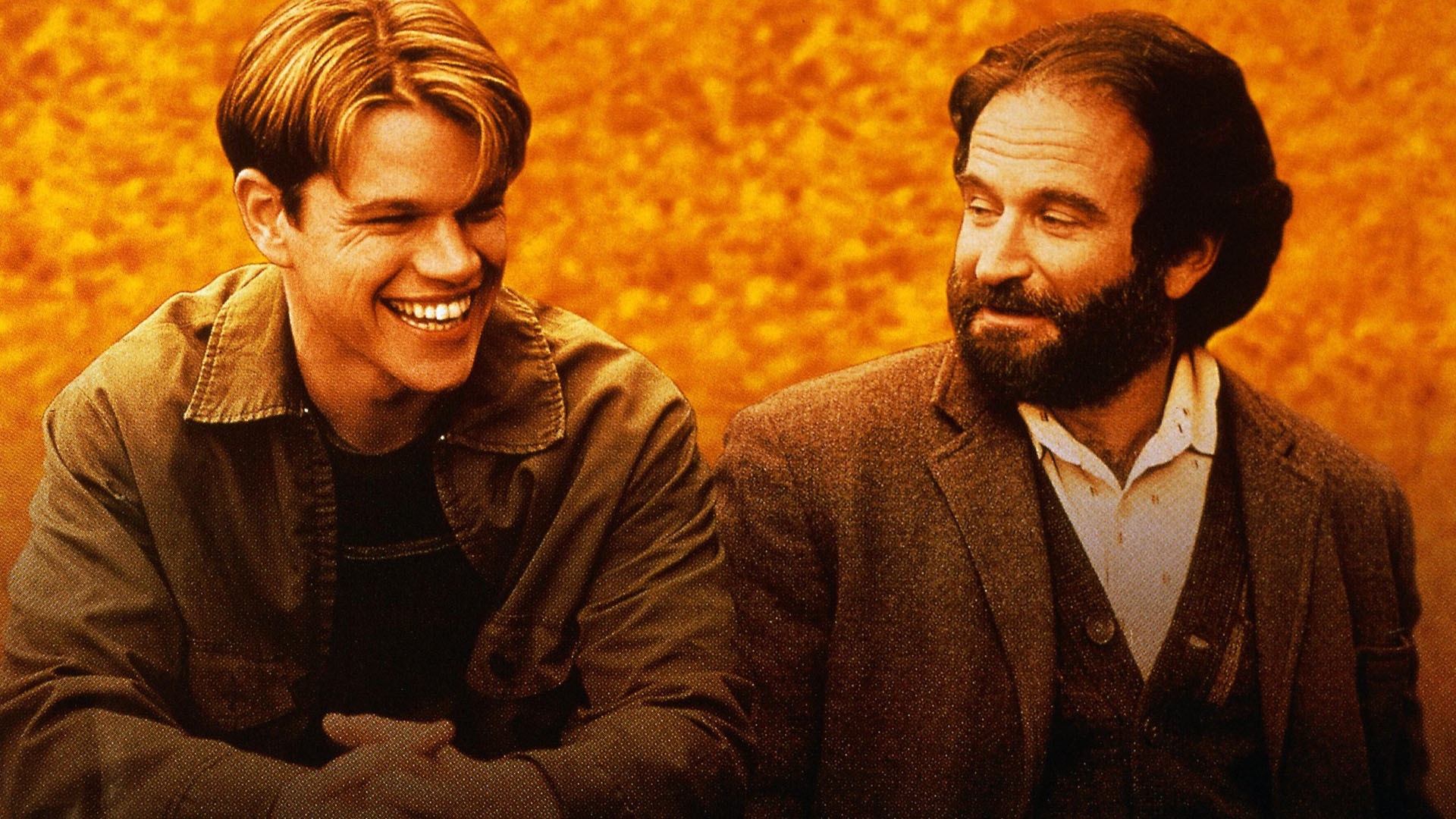
Movie - Good Will Hunting  Wallpaper


Good Will Hunting may well be the Rocky story of the 90s. Two young (then unknown) actors - Matt Damon and Ben Affleck - wrote a script that dealt with the commercial double suicide that is mental health issues and genius mathematicians. Within months, their script had sold for a million dollars (plus change), the two actors were set to star, Gus Van Sant was on board to direct and Robin Williams was lending big name clout to the supporting roles. The result was a beautiful piece of filmmaking that found both Oscar glory and box office success.

A janitor at a technological institute, Will (Damon) is a 20-year-old caught between Boston's working class environs and its elite academia. But unlike the friends he hangs with, he also has a photographic memory and an amazing ability to solve mathematical problems of the highest order. A professor (Skarsgard) tries to nurture his talent and tame his temper, enlisting the help of jaded shrink Robin Williams - the boy knows life in abstract, the man knows the pain of the real thing. Together they find an understanding and, in some small way, a path towards redemption.


The strength of Good Will Hunting lies in the amazing assurance of its script, and the backing both its cast and makers give it. Director Van Sant steers well clear of unnecessary sentiment, opting instead to find the emotional reality and harshness within the story. Damon is superb, his pal Affleck equally strong. But, in a movie that exudes quality, however, it is Robin Williams that provides both its heart and its highlight - the Oscar, in this case, was entirely deserved.


Grade - A+      9th Favourite

Ocean's Eleven


Ocean's Eleven


Let's be honest. The original Ocean's Eleven wasn't a A+  movie. But it was certainly a memorable one. Vegas and the entire Rat Pack on screen for the first time made it an event picture. Soderbergh's film is just as much of an event and, more importantly, it has taken the essence of what was good about the first film and given it a new millennium polish, with a cast who don't buckle under the weight of expectation.

Bar a few in-jokes for the old school fans, no prior knowledge is necessary. This is entertainment of the effortless order. Soderbergh's pacing leaves scant room for fidgeting, and the story spills out frame by frame so that plots can twist just seconds faster than you can cotton on.

Clooney's generous headlining performance gives plenty of scope to showcase the rest of the talent, and no-one here is lacking. Few directors have made their stars look as high-wattage. Garcia is just bad enough to want to destroy, and Roberts elusive enough to be the natural object of affection. Watch for the scene where she crosses the casino floor switching her allegiance from one man to another - that's a definite movie star scene. Damon relishes his role out of the limelight as the new kid on the block, while his same-age team-mates, Casey Affleck and Scott Caan, go for laughs.

Don Cheadle does a cockney accent to rival Dick Van Dyke, but somehow gets away with it, and Elliott Gould and Carl Reiner do some grade A scene-stealing without unbalancing the movie. Yet, special mention has to go to Brad Pitt. Loitering in the background, generally snacking, he delivers a quiet performance that suggests the hidden strengths beyond his pretty boy looks. This is one movie where wearing a suit well does him no harm at all.

But if your tastes are of a less superficial nature, there's Soderbergh's trademark cutting technique to hitch the movie up a notch, stunt work (particularly courtesy of grease-man Shaobo Qin) that can't be faked, and a heist that deserves the build-up.
But what made me love this movie was its impeccable soundtrack. I can say that the soundtrack for Ocean’s Eleven is without a doubt my all-time favourite soundtrack. And considering that’s coming from a guy that’s seen The Social Network, Gone Girl, Jurassic Park, Captain America: The Winter Soldier and The Martian, that is saying a lot.


This is a movie that plays to all demographics without feeling like a by-numbers production. To berate it for being shallow is to miss the point. This isn't the seamy Las Vegas, where the house always wins. It's a film that's as well-constructed and glamorously shiny as the monoliths that now dominate The Strip. The good guys are crooks? So what! If only all crooks were this nice. No guns, no gangster cliche swear-a-thon. This is a movie that plays to fantasies, and few do it with such relish.

Grade - A+     10th Favourite